
ESA melting the comms ice
For the Living Planet Symposium ESA (almost) hits the mark

Learning about climate change? Nice. Flexing with an 8k art piece in your living room? Priceless.
For once, something good. I know, dear reader, you're here for the bad, the worse, and the delicious Space Town gossip about image and branding. But this time… let's be positive and check out something decent for a change.
I spent the past few days in Vienna for the Living Planet Symposium, and I must admit: ESA—the queen of institutional blue and captions that should have never seen the light—decided to revamp its brand with something almost anarchic, considering the entity… colors. Images. Pretty pictures. Hell, even a painting exhibition.
The Living Planet Symposium was meant to create a vibe different from your usual Space conference, and credit where it's due: ESA made an effort to open its doors to the general public. Besides offering childcare services (sold out months before, by the way), the conference was filled with children, school groups, and generally fewer space nerds. That, in my opinion, is a win. Kudos to ESA.
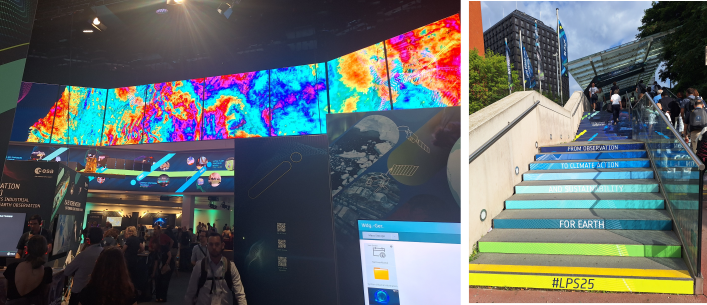
My personal favorites?
Paintings I Can’t Afford But Would Die to Own
A classy gallery featuring paintings by Susen Reuter, a visual artist who turns satellite imagery into stunning canvas art. You have to get up close to realize it's actually paint. Price tag? A bit hefty for my wallet. But by the end of the week almost everything was sold. Nice to know the Earth Observation crowd is as culturally elevated as they are economically generous. Learning about climate change? Nice. Flexing with an 8k art piece in your living room? Priceless. 7/10
More info here
And her Instagram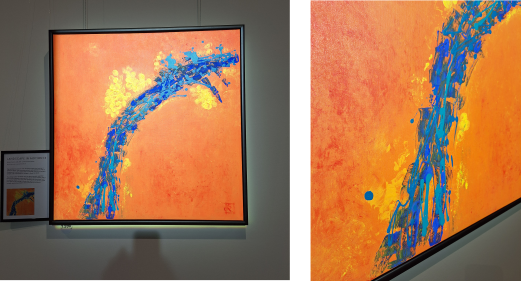
You have to go quite close to see that its an actual paint. Visual Exposition Category: The Hakuryu Experience
EarthCARE data transformed into a "dragon's song of peace," to quote ESA and JAXA, or a majestic psychedelic trip with a dragon lunging at you from a mega screen in a dark room, to say it how I would. 9/10
Learn more hereGame I’d Steal:
The Development Seed team and Copernicus Data Space Ecosystem (CDSE) brought Europe to life in LEGO form. Log into their app, get assigned a random European region, and place your piece onto a giant LEGO map. I got Scotland. Yes, I may have snatched the last dark blue LEGO piece from a child's hand to complete my masterpiece. But life’s tough—the sooner they learn, the better. 10/10
Check out their blog page for more
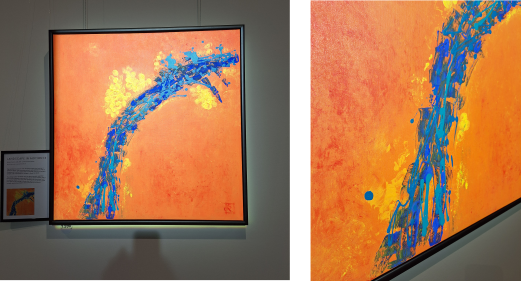
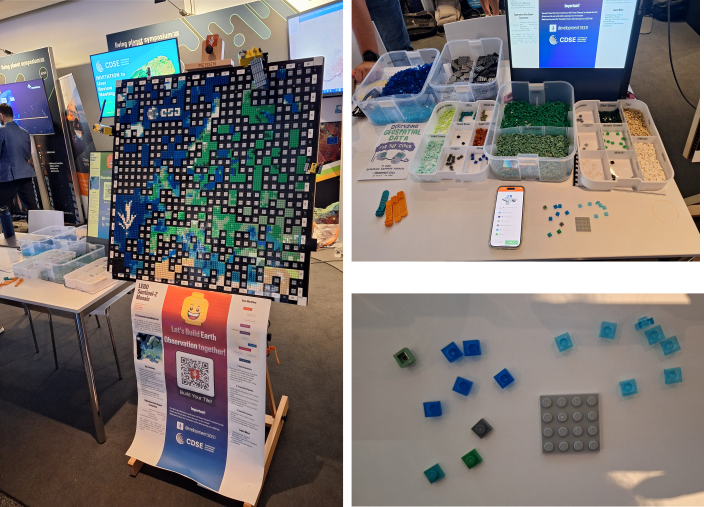
I even interrogated Emmanuel Mathot from Development Seed:
So… what's the deal with the LEGO thing?
"We're building a collaborative LEGO map of Europe using authentic Sentinel-2 satellite imagery at the ESA Living Planet Symposium. Conference attendees collaborate throughout the week to assemble the mosaic, brick by brick, creating a physical representation of Earth observation data."
Nice. But how does it actually work?
"We process Sentinel-2 satellite data through our openEO by TiTiler service, converting pixels into LEGO colors using advanced color mapping algorithms. The image is divided into tiles that conference participants can build and place on a gridded frame at the CDSE booth. We have a dedicated project page that provides a detailed explanation of the entire process."
Why LEGO? Just 'cause you're 80s kids?
"It all started with a fun concept of using a LEGO map on the screen instead of standard pixels. We had a great time brainstorming around this idea and eventually decided to present it physically at LPS as a collaborative installation."
How demure of you. I repeat, why LEGO?
"Because we are big kids at Development Seed!”
I knew it.
“In practice, LEGO can illustrate how Earth observation functions—individual data points (or pixels) are transformed into bricks that come together to create a larger picture. It's hands-on, collaborative, and makes satellite data accessible to everyone. Additionally, it embodies our open-source philosophy: building something meaningful together, piece by piece."
Thanks, Emmanuel. Please keep me updated on how my Scotland piece is holding up.
Beethoven or Bowie?
My overall vote for ESA’s marketing and communication efforts at the Living Planet Symposium is high. It proves that when you give the comms team a budget and freedom, they can work magic.
My only gripe—which extends beyond this symposium and beyond ESA—is Europe's sacred vs. profane imbalance.
Everything is polished, polite, strictly within the lines. Don't get me wrong—I’m not expecting Slipknot at an ESA conference—but let me illustrate what I mean.
At JPL, every successful mission was blessed by Mohican Guy—real name Bobak Ferdowsi, flight engineer and proud owner of ever-changing mission deployment hairstyles. For the Curiosity landing, his iconic mohawk was democratically chosen by the team—because nothing says high-stakes engineering like arguing over haircuts. Even Obama gave him a shout-out.
Europe is still stiff by contrast. I get it—it's a political union, member states, old-school formalities, Beethoven. But stiffness means less enthusiasm, which usually means fewer young people.
I applaud the effort. I applaud the colors, the exhibitions, the LEGO, the VR. But the stiffness? Still lingering like an old, shut room.
Want to see some space fun where you least expect it? Visit the ESPI headquarters in the heart of Vienna. Outside: establishment. Inside? David Bowie’s living room.
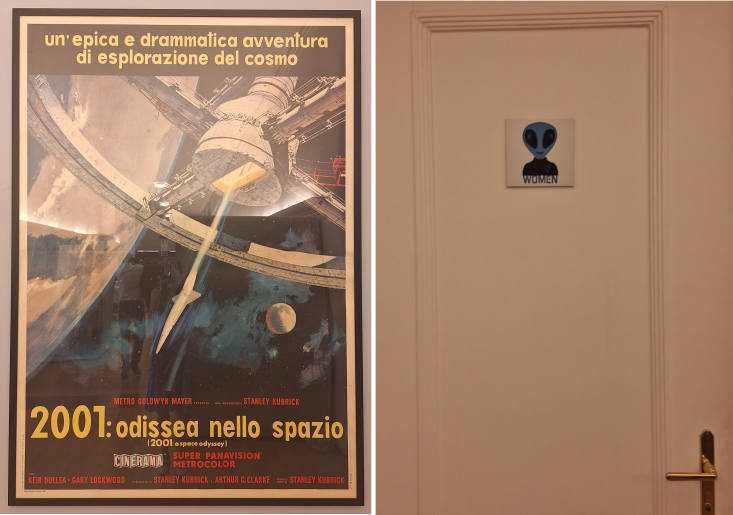
Alien signs on bathroom doors? Progressive. A space mosque sculpture at the entrance? True global citizenship. A vintage Italian poster of 2001: A Space Odyssey? Classy.
Maybe ESPI gets what ESA hasn't quite yet: what's the point of all this—the missions, the satellites, the struggles—if you can't have a little fun on the way?
‘Til next month.
xoxo
Emma